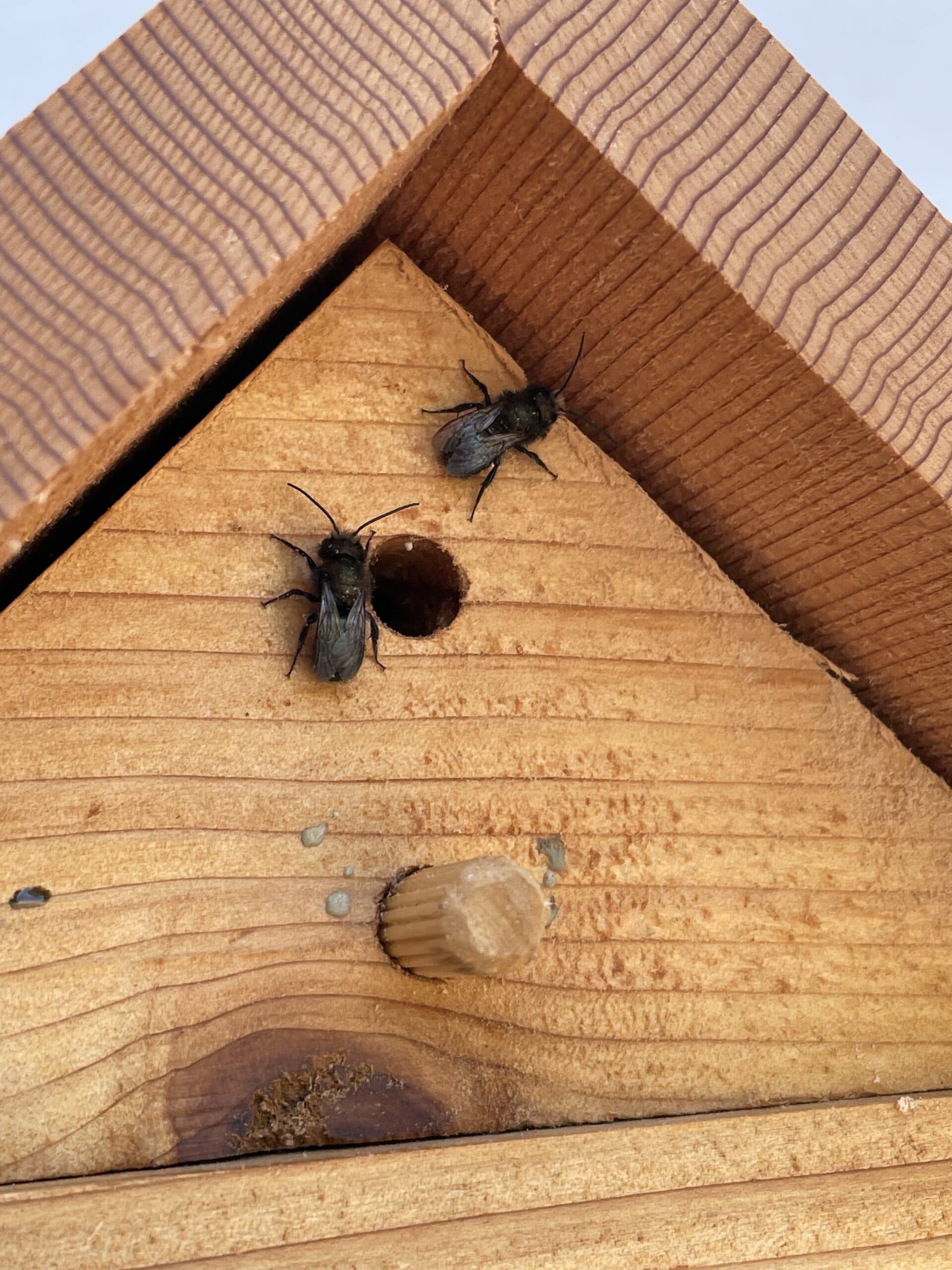
(Very) Late 2025 Mason Bee harvest
After dinner, my wife and I enjoy sitting next to the garden, while the kids jump on the trampoline nearby. My wife examining the garden’s growth; I of course am utterly distracted by every Mason Bee milling about. The nesting boxes are a short flight distance from the garden, close enough to follow each bee into their little hole.
This 2025 season, the Mason bees were more active than at any other time in the 7 years I have been keeping them. I had a nest tray with 96 holes get completely filled, then had to quickly add two more that were also completely filled!!!
Unfortunately, due to a very busy life season, I did not harvest the Masons in October when I should have. Mason bees to not have to be harvested. They will happily stay snug in their holes, inside their cocoons, and pop out the following spring to do their thing. However, harvesting the bees promotes clean healthy cocoons and limits the possibility of issues that could kill them, such as wasps or meal moths.
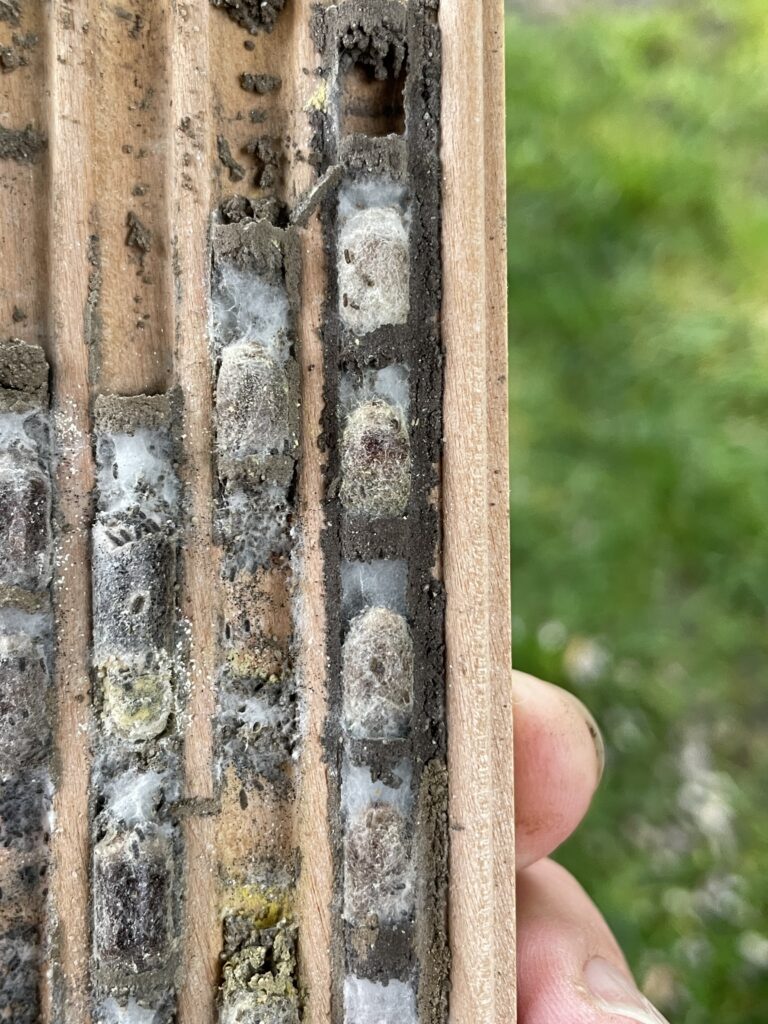
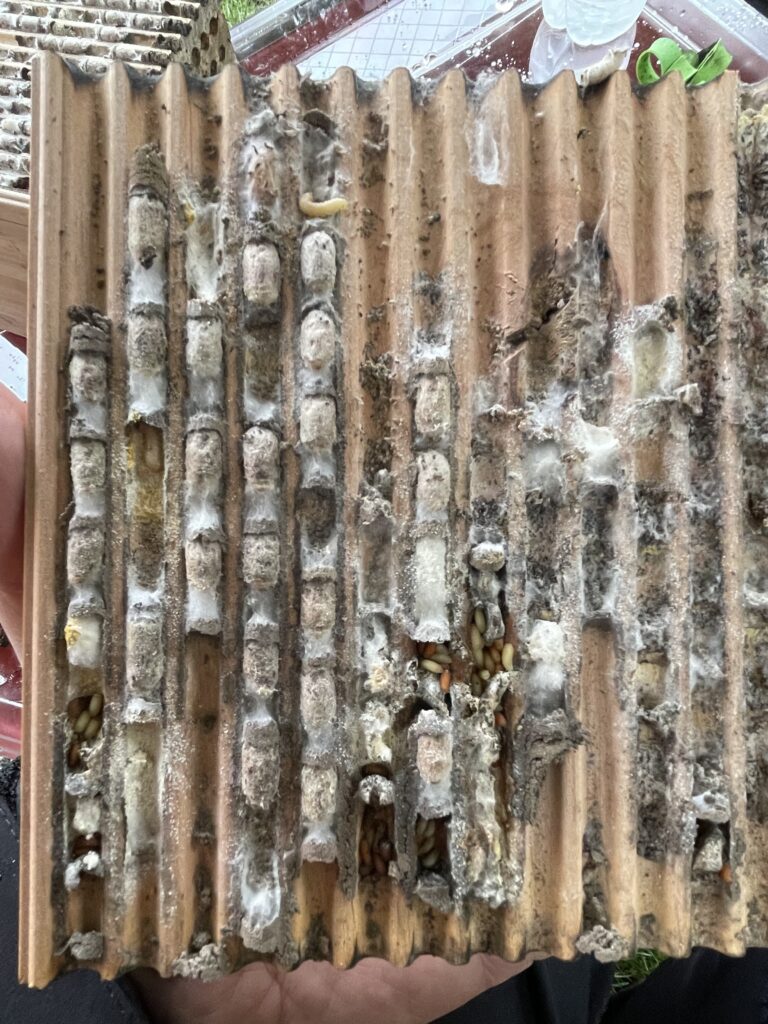
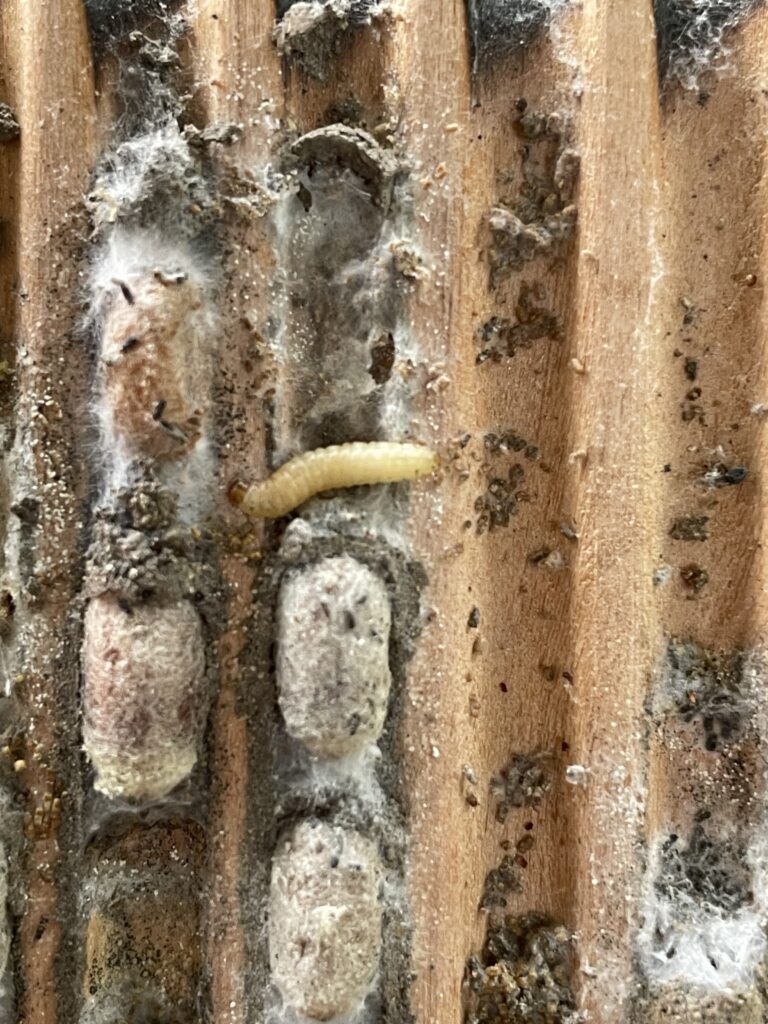
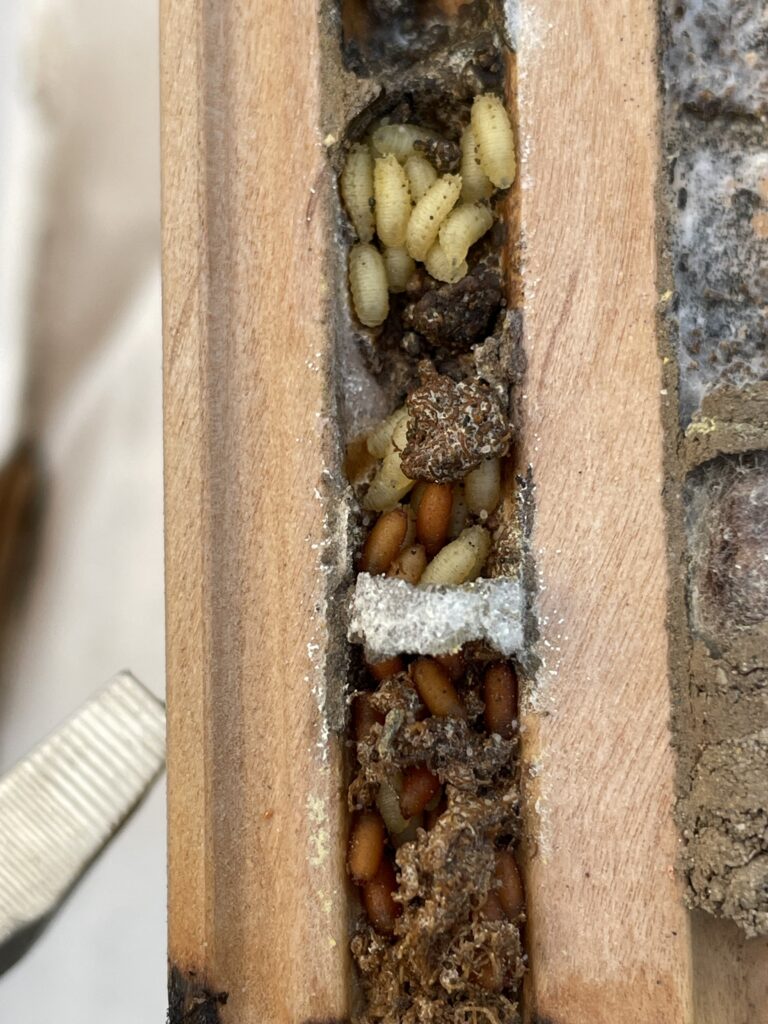
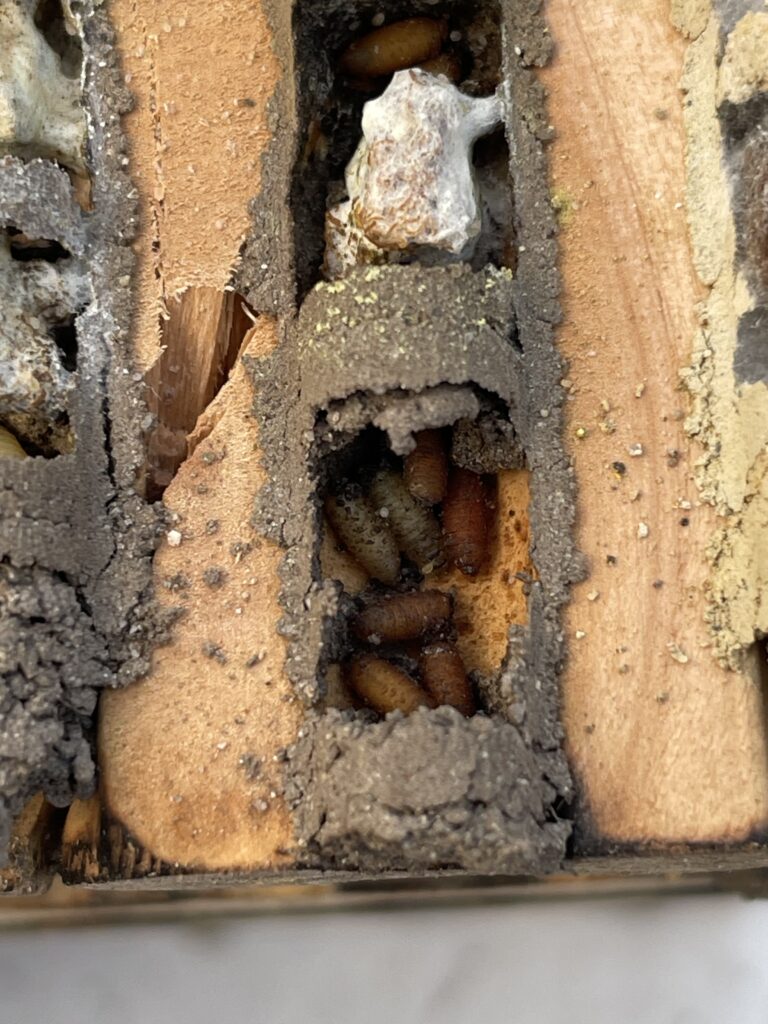
Today, in preparation for the fast approaching 2026 Mason bee season, I harvested the cocoons. To my utter horror and dismay, I found that nearly half the bees had been lost to wasps and meal moths. The poor bees worked so hard and so faithfully gathering all that pollen and laid so many eggs and I failed them. How many more of their babies could have been saved if I had harvested on time?
There are still several hundred cocoons that I believe are viable. The cocoons are now safely separated and sealed away from continued horrors. If I had not harvested when I did it is entirely possible the whole nest box would have been decimated.
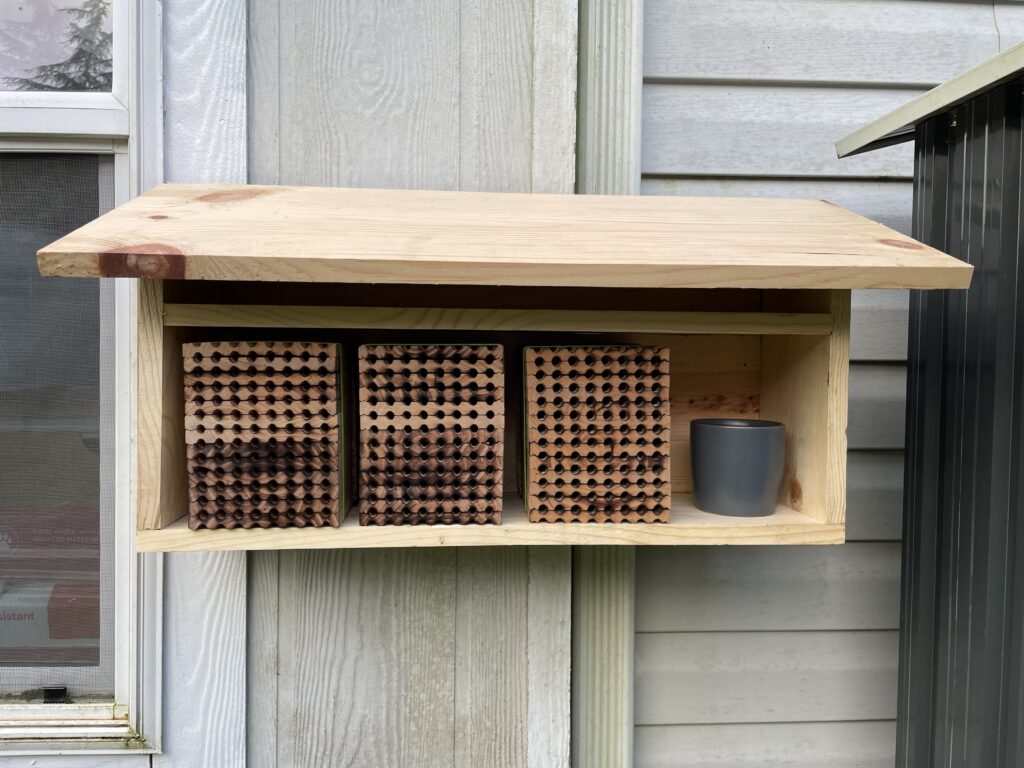
For the 2026 season I am upsizing. I built a new house for the nesting trays. There is now space for four of the 96 hole nesting blocks. I am hoping for another strong Mason bee season. This year I will harvest on time!
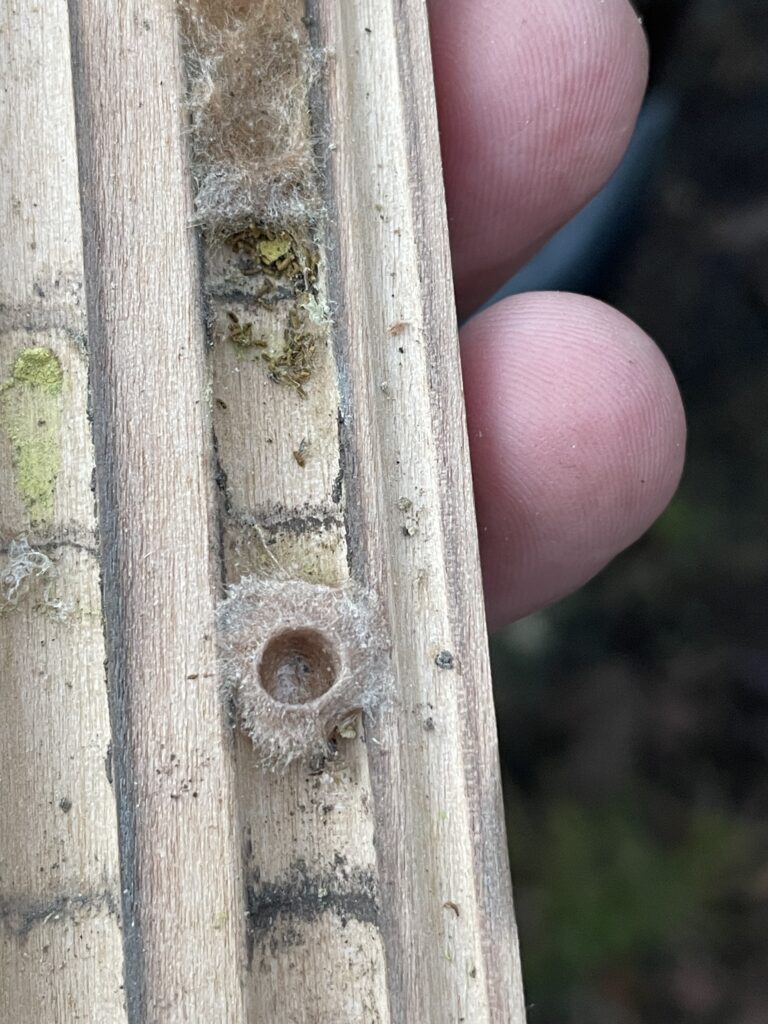
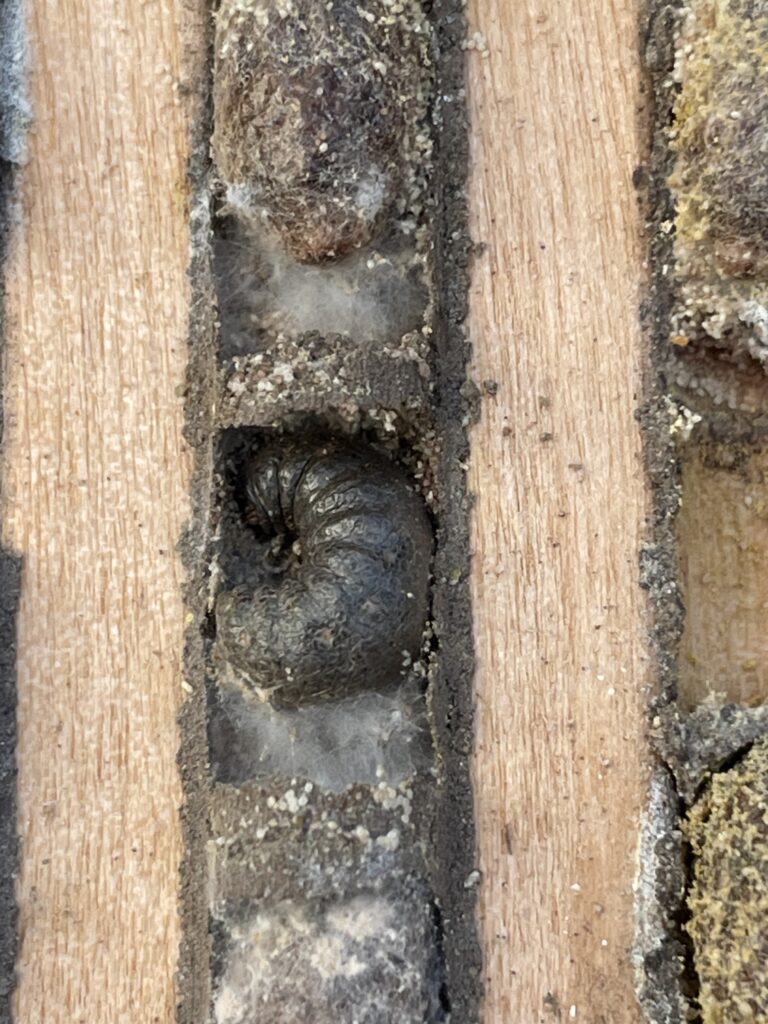
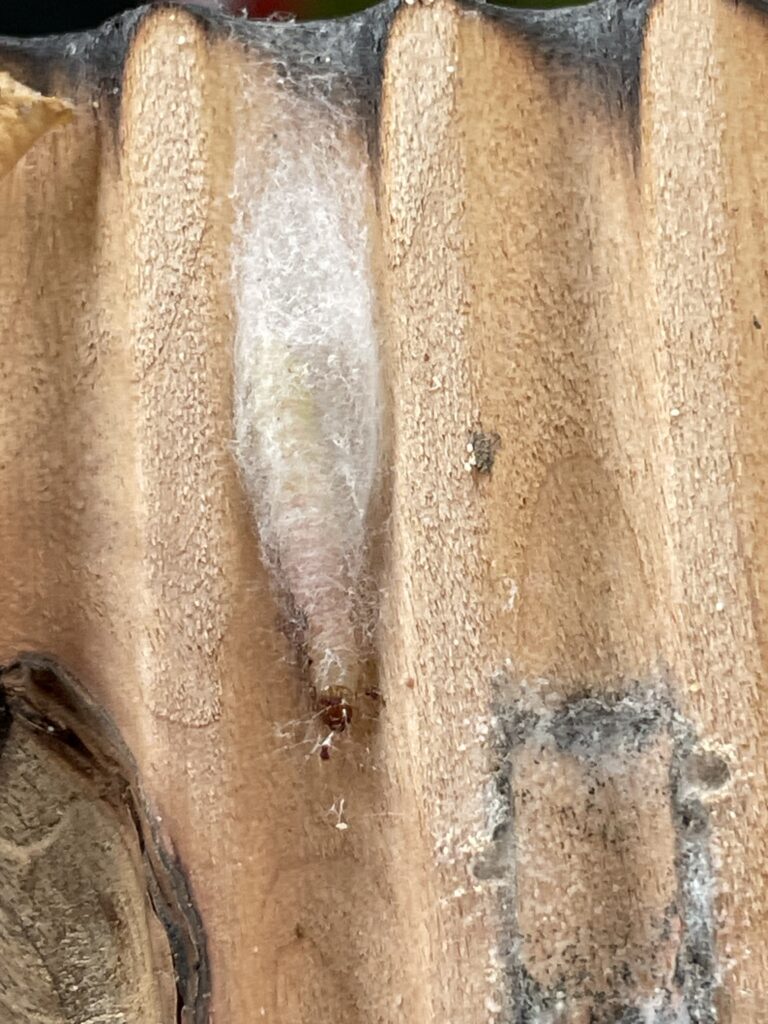
Here is a random assortment of pictures taken during the Mason bee harvest. You will see good mason bee cocoons, parasitic wasps larvae, meal moths larvae, and some chalkbrood.